Successful Physicians And Healthcare Reform: Will Old Dogs Learn New Tricks?

     Last week I was fortunate to hear a presentation to a group of hospital trustees and senior management by noted healthcare consultant Jamie Orlikoff. For three hours, Jamie shared his knowledge and predictions on what healthcare reform and related developments will mean for hospitals and doctors in the near (2-5 year) future. The audience was riveted, but to say the least, his comments were unsettling.

     In a nutshell, Jamie sees change coming not so much from what the recent healthcare reform statute says, but from the economic and political forces that inspired the new law. In his view, the implementation of the law through regulatory action, and the corresponding movement of private health insurers in parallel with the federal payors, will create irresistible forces, compelling hospitals and physicians to radically alter their current modus operandi.

     The number one driver of change is the unsustainable growth in U.S. healthcare costs. Although the healthcare reform law, on its face, does almost nothing to reduce costs (and increases costs by covering many now uninsured), it sets the stage for future regulatory action that will decrease the amount of money the federal government spends on every covered person. Once everyone is covered, and private insurers are following the federal government's lead, there will be few places for hospitals and doctors to shift their costs. They will have to learn to get by with less, much less.

     Slashing reimbursement rates will be part of this process, but the primary focus will be on using economic incentives to create improved quality and outcomes. Whether through accountable care organizations ("ACOs") or value based purchasing ("VBP" - bundling payments for episodes of care), these measures will require hospitals and doctors to actively cooperate with respect to the economic consequences of their patient care decisions, and to be prepared to accept smaller slices of a smaller pie. This has been unheard of in most places outside of the Mayo Clinic and Geisinger Health System. That is about to change. According to Jamie Orlikoff, many hospitals around the country already have doctors on their medical staffs banging on their doors, asking to be acquired and "integrated" into a larger network of providers. I don't disagree that when the money starts to shrink, many physicians will seek safety in numbers and a bigger tent.

     Where I disagreed with Jamie Orlikoff was on the inevitability of this process as it concerns well established, successful physicians. In my mind, physicians who have been in practice for 20-25 years, who have a loyal patient following, strong referral sources and a sterling reputation, will look at ACOs and VBP and ask themselves, what does this mean for me? Many of such physicians will have the ability to retire in the next 5 to 15 years. What will be their incentive to embrace changes that, when all is said and done, translate into lower incomes than they now enjoy?

     Jamie Orlikoff would argue that such physicians will have no choice - they must either get on the bus or get run over. I'm not so sure. No matter what the government does, whichever physicians are thought of as the best in their areas will not change, and patients will still want to see them. Patients will pay out of pocket, complain to their insurers and call their Congressmen if they are denied that opportunity. This may not last forever, but it may last for enough of that 5-15 year window to make successful physicians less than eager to jump on the reform bandwagon. In addition, such physicians may easily overestimate how long they will be protected by this phenomenon.

     What does this mean for those attempting to construct the relationships and systems that healthcare reform seems to require?  It means they need to identify how many highly successful physicians they have to work with, and how many of those "old dogs" will learn new tricks.


     For some hospitals/health systems, there simply may be too many old dogs that will not learn new tricks, at least not in their current environment. Jamie Orlikoff advised that such hospitals/systems, regardless of their current financial performance, would be wise to seek a merger or affiliation with a larger system, thus gaining the ability to better absorb or manage physicians unwilling to accept the changes required by healthcare reform. For those with fewer such old dogs, or for the hospitals/systems with no ability or willingness to merge, the challenge will be formidable.

     Hospitals/health systems should resist an extreme response to their old dogs in either direction, i.e., neither write them off nor capitulate to their every demand. Integrating successful physicians into the relationships and systems mandated by healthcare reform will require understanding their view of the world, a commitment to collaboration and skillful conflict resolution.

[Image: Gloria Swanson and Teddy the dog, from the film "Teddy At The Throttle," 1916]

Guido v. Duane Morris: Court Requires Kabuki Dance For Mediated Settlement

     Earlier this year I wrote about the oral argument before the New Jersey Supreme Court in Guido v. Duane Morris. The case concerns the plaintiffs' right to sue their former lawyers for malpractice based upon a settlement the plaintiffs accepted after mediation two years earlier. It required the Court to reconcile two previous opinions, Puder v. Buechel, 183 N.J. 428 (2005) and Ziegelheim v. Appollo, 128 N.J. 250 (1992). In a decision handed down last week, the New Jersey Supreme Court ruled that the former clients could overcome a motion for summary judgment and proceed to trial - essentially to attempt to prove that the settlement agreed to by them could have been better but for the negligence of their former lawyers.

     Despite assurances in the Court's opinion to the contrary, Guido paints a large bullseye on every lawyer whose client has second thoughts about a mediated settlement after the ink is dry. Significantly, the Court emphasized that when putting the mediated settlement in Guido on the record,


"unlike in Puder, plaintiffs did not represent to the court that
they were satisfied with the settlement, or that the settlement
was fair and adequate.
(emphasis added) The entirety of the colloquy between the court and plaintiffs concerning the settlement addressed but two questions:  whether plaintiffs understood and agreed to abide by the settlement terms, and whether plaintiffs were subject to any impediments in understanding those terms.  Glaringly absent is any representation by plaintiffs that the settlement was 'fair' and 'adequate,' a representation deemed crucial in Puder."


      Did the Court really believe that the plaintiffs in Guido v. Duane Morris would not have answered "yes" if asked whether they were satisfied with their settlement, and whether it was fair and adequate? Apparently these are now magic words that all counsel would be wise to include in written acknowledgments from their clients upon approving any mediated settlement.

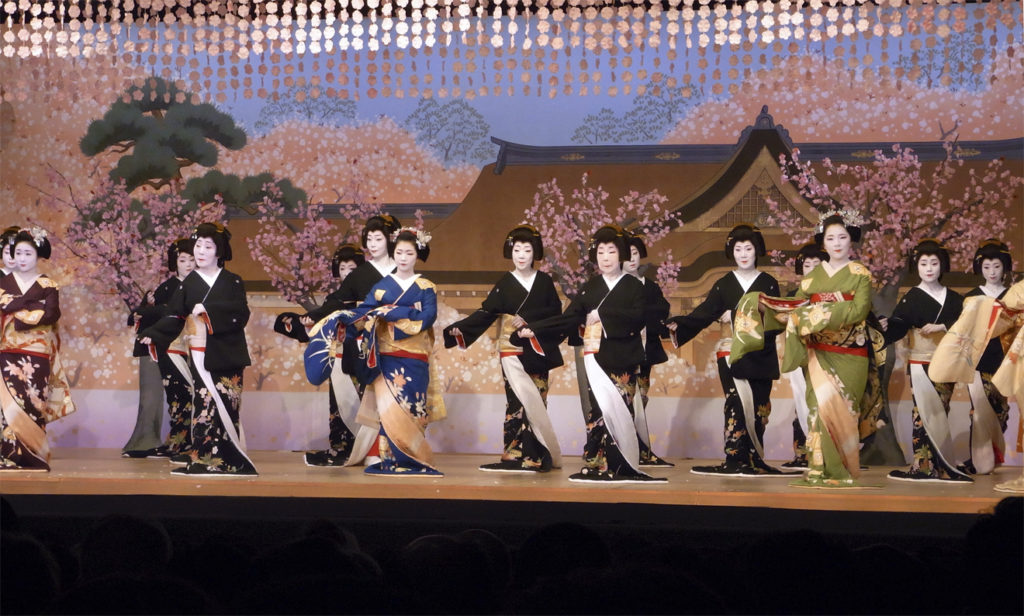
     [Image: Kitano Odori kabuki dance, by Onihide, April 18, 2009]