Mediation in Healthcare Interview at Disputing Blog

Holly Hayes Bovio and Victoria VanBuren over at Disputing were very kind to post Holly's Q&A with me on Mediation in HealthcareDisputing has become one of my favorite ADR blog reads, and Holly and I share both a Duke connection and a focus on healthcare. I'm looking forward to collaborating with them again on healthcare ADR topics of interest.

  [Image: Thank You for using the Garden State Parkway, June 5, 2006, via Wikimedia Commons]

Guido v. Duane Morris: Potential Setback For Mediation?

     On Wednesday, January 20, 2010, the New Jersey Supreme Court heard oral argument in Guido v. Duane Morris, a case focused on whether a client could sue his former lawyers for malpractice based on a settlement the client had accepted years earlier.  It was on appeal from an Appellate Division decision in favor of the client that was well covered by Mary Pat Gallagher on LAW.COM in July 2009.  The case will require the Supreme Court to reconcile two of its previous decisions, Ziegelheim v. Apollo, 128 N.J. 250 (1992) and Pruder v. Buechel, 183 N.J. 428 (2005).  The legal community is closely watching the case, and both the New Jersey State Bar Association and the Trial Attorneys of New Jersey participated as amicus curiae.

     As reported by Michael Booth in the New Jersey Law Journal online edition, the oral argument found counsel and the Court struggling to parse the holdings in Ziegelheim and Pruder, with a heavy overlay of public policy considerations involving the attorney-client relationship. Although the outcome will likely be an important milestone in the law of attorney malpractice, its potential effect on the use of mediation should not be overlooked.

     Guido's underlying cause of action was settled after mediation. The settlement was placed on the record in the trial court, and included questioning of the parties to confirm their understanding and agreement to be bound by the settlement. Nonetheless, the Appellate Division found that the plaintiff's later alleged realization that his lawyers had not explained the long-term value and marketability implications of the settlement was a sufficient basis for a legal malpractice claim.  There was no question raised about the propriety of the mediation or the enforceability of the settlement itself (other than an argument by Duane Morris that Guido should have to ask the trial court to reform the settlement before suing his former counsel).  But a Supreme Court decision in favor of the client in Guido should cause lawyers to think differently about how they settle cases in mediation.

     Parties and their counsel often work long and hard in mediation sessions to hammer out a resolution to complex issues. Along the way, each party spends bargaining chips and gains concessions, the implications of which are, of necessity, evaluated on the fly. At the end of a successful day, the parties memorialize their settlement, sometimes subject to a formal agreement and court approval, sometimes not. Along the way, counsel will help their clients understand the legal consequences of their negotiation moves, and usually will take some time to review the final proposed settlement before sealing the deal.  But how much of such good counsel is enough?

     If parties to a settlement can look back with 20-20 hindsight, years later, and successfully assert that legal malpractice occurred based on their counsel's failure to fully explain issues such as those alleged in Guido, the parties' ability to settle many cases in mediation will be significantly hampered. This is not because parties will need to be better informed about their settlement decisions than they are now, but because counsel will need to be prepared to prove that their clients were well informed. Today, counsel can reasonably rely upon a brief conversation, or even a nod, to confirm the client's understanding on a given point. Often, that conversation or nod will follow hours of previous conversations and nods that unfolded during the course of the mediation. Will the awaited Guido decision effectively require all of that to be written down, and fully draped with the litany of disclaimers that characterize formal opinion writing?  If so, each mediation session should be scheduled to include an extra day, post-settlement, for the "c.y.a." exercise.

     One way of dealing with this problem is to have counsel provide a written cover letter to the client in connection with a formal settlement agreement prepared following the mediation. But this option raises the possibility that the client will balk at the formal settlement agreement and allege that the lawyer's explanatory letter came too late.  If the essence of the settlement reached at the conclusion of the mediation is already enforceable, the lawyer is still in the soup.

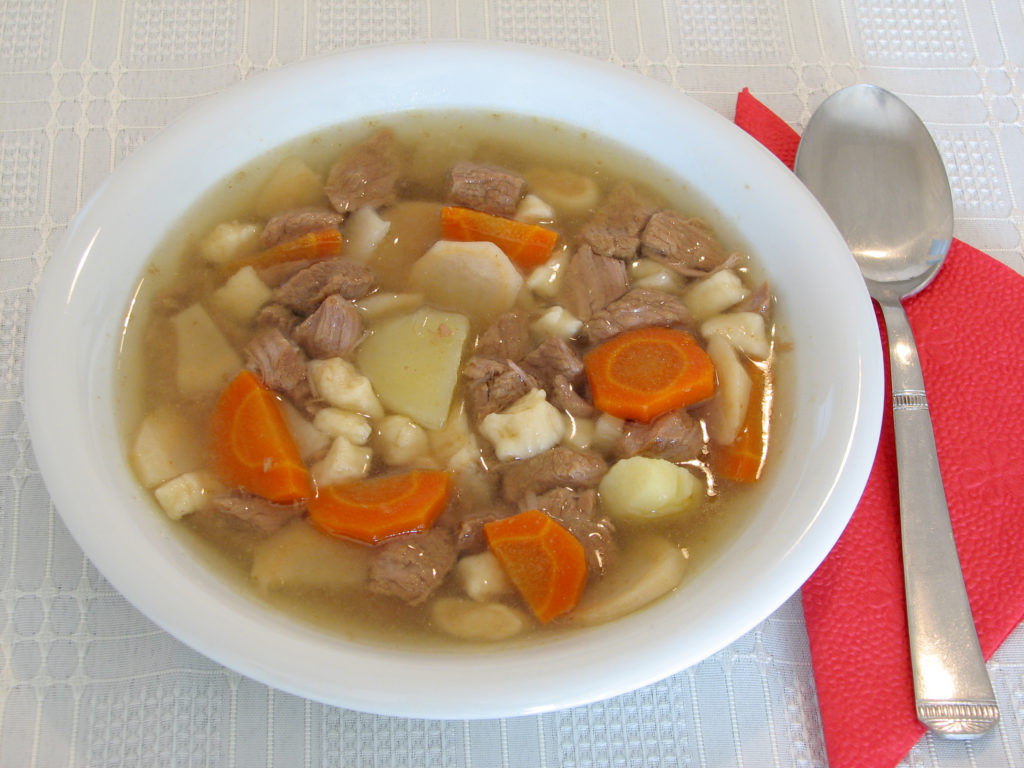
  [Image: Home-made Hungarian goulash soup, by Hu Totya, October 12, 2008]


     The Bar will anxiously await the Supreme Court's decision. In the meantime, if you have thoughts about how this issue affects your participation in mediation, please share your comments.

Mediator's Proposal Roundtable

     [Image: King Arthur and the Knights of the Round Table, via Wikimedia Commons.]


     I was delighted to see my comments on the use of "the mediator's proposal" included in a roundtable on that subject hosted by Steve Mehta over at Mediation Matters. Others weighing in on the topic were Lee Jay Berman, Don Philbin and Jeff Thompson. It is interesting to see how much agreement occurred among four mediators who did not discuss their answers to Steve's questions in advance.

     If you are interested in mediation and do not already read Mediation Matters, you should.  Steve Mehta regularly turns out well written posts on interesting mediation subjects from a very practical perspective.