
Program On Healthcare - Consumer ADR In Philadelphia

     I heard from Jean Hemphill, Chair of the Health Care Group at Ballard Spahr, that she will be among the speakers at a free seminar on Thursday, October 16, 2008, entitled: "Arbitration of Health Care Claims Seminar: Reducing Malpractice Exposure and Maximizing Your Collections."  The program will be held from 2:00 to 4:30 p.m. at the Philadelphia Marriott West in West Conshohocken, Pennsylvania.

     Other speakers scheduled to appear include Ballard Spahr partners Alan S. Kaplinsky and Jeremy T. Rosenblum, former Duke University General Counsel David Adcock, Keith Maurer and Aaron Rose of National Arbitration Forum spin-off Forthright, and Deborah Lorber, Director of Risk Management, Drexel University College of Medicine.  The agenda promises to "explain how arbitration of malpractice and billing claims can radically reduce malpractice exposure, increase success in collecting on delinquent accounts, and improve patient relations."

     This seminar appears poised to argue the other side of the debate raised by current legislative efforts to ban pre-dispute arbitration agreements between healthcare providers and patients, particularly in the nursing home context.  That debate should go on, but it will be important for both sides to consider alternatives other than an "all or nothing" result.  Among the issues in play:

- Should agreements to arbitrate consumer/patient bills for services rendered be given the same status as agreements to arbitrate claims of medical malpractice?  Should different rules apply?

- Can steps be taken to assure that patients and their families truly understand the meaning of arbitration agreements upon the initiation of a healthcare service, with enforcement of the arbitration agreement being dependent upon adherence to some "industry standard" measures?

- Can healthcare providers and ADR professionals do more to assure the neutrality of mandated ADR processes, and in particular, nullify the perceived advantage of "repeat users" of ADR services?

     If you will be anywhere near Philadelphia this Thursday, consider preregistering via the Ballard Spahr website, and see if the presenters at this program address these questions.  You can share your impressions by leaving a comment on this post below.

[Image: Geno's Steaks at dusk, Philadelphia, PA, by Bobak Ha'Eri, April 19, 2007]

New Jersey Hospital Seizes An Opportunity To Maintain Its Mission

     I've written here previously about the need for all constituents at a financially challenged hospital to collaborate towards a mutually positive solution, and to seize the moment of opportunity that arises once it is clear that the status quo cannot be sustained.  Waiting for a financially strapped state government like New Jersey's for help may result in others seizing control, but will not likely fix the underlying problems.

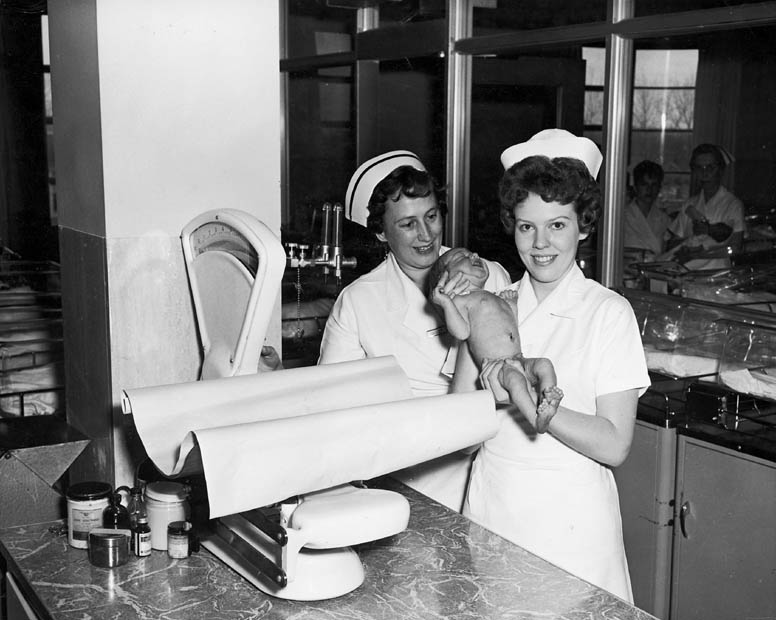
     It was great to read last week that Raritan Bay Medical Center, a two hospital system with an older and larger facility in Perth Amboy and a newer, smaller complex in suburban Old Bridge, was planning to meet with potential buyers of the Old Bridge facility to secure a cash infusion for the struggling Perth Amboy hospital.  I was born in Perth Amboy Hospital in 1953.  No, this is not me below, but the scene probably looked much like this back then.

     Writing in the Star Ledger online edition, Tom Haydon reports that employees at the two hospitals were informed of the possible sale last month, and that local and state political figures were fully behind the move.  The sale would consolidate Raritan Bay's operations at the Perth Amboy facility, where Raritan Bay serves a large number of uninsured patients, while permitting the Old Bridge facility to continue operating with minimal disruption to its employees and community. 

     It remains to be seen whether the proposed sale will occur and have a lasting corrective effect on Raritan Bay's financial challenges.  However, it is refreshing and encouraging to see the governing board and management of a hospital having the foresight and will to act, while they still have options, to remain true to their view of their hospital's mission.

[Image: Two nurses with baby in nursery, Toronto, Ontario, circa 1955, by Canadian Nurses Assoc.]

Don Vanarelli's Top 10 New Jersey Mediation Blogs!

     I was pleased to see that New Jersey's mediation community had moved far enough into the blogosphere to warrant a "top 10" list of New Jersey mediation blogs, and that this blog had made the list.  Attorney and mediator Donald D. Vanarelli came up with the list and posted it here, and it was picked up as far away as New Zealand (by Geoff Sharp here)!  Among the more active blogs mentioned were Sans Mediation World of ADR (by Marvin Schuldiner), New Jersey Family Law Matters (by fellow LexBlog client T. Sandburg Durst), NJ Family Legal Blog (by the Family Law Group at Fox Rothschild) and Don Vanarelli's own blog on NJ Elder Law, Estate and Special Needs Planning, Mediation and Collaborative Family Law


     Don Vanarelli's path crossed with mine nearly 20 years ago when we both practiced law at the same firm.  I saw him again last year at a meeting of the Justice Marie Garibaldi Inn of Court on ADR, prior to the launch of his blog.  Don has carved out a niche in the elder law practice area that is undoubtedly enhanced by his mediation training and experience.  His blog provides some icing on that cake, and hopefully, will help spur others to join the ADR dialogue. 

     [Image: Top ten icon, by STyx and Producer]

Do Doctors Confess Errors Only When Caught?

     A study published on October 6, 2008 in the Archives of Pediatrics and Adolescent Medicine suggests that doctors will more frequently tell patients about errors that are obvious or likely to be detected than they will tell them of less apparent errors.  A post by Jacob Goldstein in the Wall Street Journal's HealthBlog reviews the study and places its findings within the context of our evolving healthcare culture.


     Doctors traditionally have been less than forthcoming in telling patients about errors because they fear potential lawsuits, and have been told consistently by defense attorneys to say nothing that could be construed as "an admission of guilt."  Forces are at work to change this.  These include:

- the "apology and disclosure movement" promoted by "Sorry Works";

- the enactment by some states of legislation precluding the use of "confessions" or apologies in subsequent malpractice litigation;

- required disclosure of errors that cause harm to patients under Joint Commission accreditation standards; and,

- a variety of other governmental and industry mandates for "transparency."

     Aside from these external forces, many doctors and the hospitals in which they practice have begun to realize that it is in their own best interest to adopt and implement a program under which:

- medical errors are identified and disclosed;

- with an explanation of the error;

- an assurance that it will not be repeated;

- a sincere apology; and,

- an offer of just compensation.

     These elements can be combined and put into practice using a variety of alternative dispute resolution techniques.  The July/August issue of the Patient Safety & Quality Healthcare e-Newsletter contains an excellent summary of five approaches now deployed around the country: the "Rush Model," the VA Model," the "University of Michigan Model," the "Pew Mediation and ADR Model," and the "Internal Neutral Mediator Model."

     The authors of that article, Gary A. Balcerzak and Kathryn K. Leonhardt, conclude that "the success of existing ADR models is promising.  With the potential to promote disclosure, meet the needs of patients, reduce costs, and improve patient safety, ADR in Healthcare holds great promise for the future."  I could not agree more.

[Image: People waiting for confession, Lourdes, France, by Jean-noel Lafargue, August 9, 2005]

Stark IV Rules Create Traps For The Unwary - But Mediation Can Help

Fellow LexBlog powered blogger Todd Rodriguez, writing in the Physician Law blog, points out that the Centers for Medicare & Medicaid Services ("CMS") recently made a number of substantial changes to the Stark self-referral regulations that may affect existing business arrangements of physicians, hospitals and their partners.  Some of these changes went into effect on October 1, 2008, while others will take effect one year later.  In particular, these changes include the following:

1. Physician owners of an organization are now deemed to "stand in the shoes" of that organization with respect to its financial relationship with a provider of services to whom patient referrals are made.

2. The definition of "entity" for purposes of Stark prohibitions has been expanded to include a person or entity who actually provides the service "under arrangements" with the person or entity who submits the claim for payment to Medicare.

3. "Per service/per click" and percentage based rent arrangements under space and equipment leases between physicians and entities to which they refer will be prohibited.

An earlier post by Michael Cassidy in another LexBlog product, the Med Law Blog, also discussed these and other Stark IV changes here

The message for physicians, hospitals and others in a position to provide Stark designated health services or refer patients for such services is clear.  Many financial arrangements previously blessed by counsel may need to be reviewed and restructured, either immediately or within the next year. 

Sometimes the agreements creating these financial arrangements will contain "unwind" or "renegotiation" provisions to address material changes in law and regulations.  When the agreements are silent, the parties often have a mutual interest in renegotiation, although in some cases one of the parties may seek to escape from the deal entirely by claiming it is "void for illegality."

Whether or not mandated by their agreements, the parties to a transaction thrown out of compliance by the new Stark regulations can often benefit from a mediated restructuring of their deal.  As contrasted with a litigated solution (and many direct negotiations), the mediation process in this context offers confidentiality, speed and reduced legal expenses, while enabling the parties to control their own destiny.  It also enables the Byzantine requirements of the healthcare regulatory scheme to be met effectively, while preserving the parties' relationship that extends beyond their monetary interests of the moment.

[Image:Computer mouse caught in a mouse trap, by Karen Rustad, October 18, 2005]