
Mediation When It's All About The Money

        
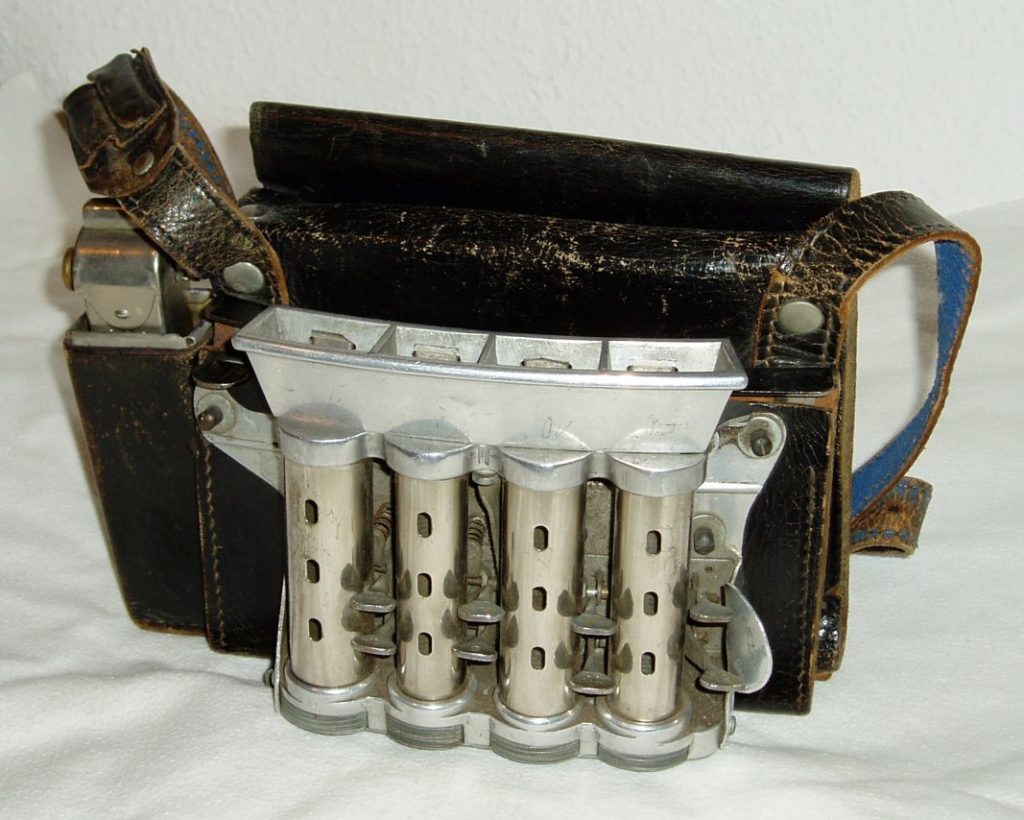
          [Image: a conductor's bag with a money changer, by LosHawlos, June 17, 2005]


          Most mediators are attracted to the field by a belief in the effectiveness of interest based negotiation and the power that it holds for resolving disputes through mediation.  As most clearly articulated by Roger Fisher and William Ury in Getting To Yes, and embodied in our modern business lexicon as the "win-win solution,"  the search for resolutions that creatively address the parties' true interests is the essence of today's mediation training and practice.  It is thus with great reluctance that many mediators confront and respond to the notion that some disputes really are about money, and nothing but money.

          Attorney and mediator J. Anderson ("Andy") Little, author of the book Making Money Talk: How to Mediate Insured Claims and Other Monetary Disputes, urges mediators not to cringe at the thought of mediating a purely monetary dispute.  As he sees it, mediators who limit their role in such cases to that of a messenger between the parties are selling themselves short, and doing the parties a disservice.  Having read Mr. Little's book, I was even more persuaded by his presentation at the ABA Section of Dispute Resolution Spring Conference in Seattle entitled "Negotiating By The Numbers." 

          Before getting into what mediators can do in such cases, let me say that  Mr. Little does not accept the premise of many attorneys coming into mediation that every case is only about money.  Although I hear this from one of the attorneys at some point in almost every mediation, it is not usually true.  In most healthcare disputes that are ripe for mediation, the parties have interests at stake other than money, or which cannot easily be reduced to a specific dollar demand.  It usually takes some time and effort to uncover or get the parties to value their non-monetary interests, but they are there nonetheless.

          Assuming the parties really have no interest at stake other than how much money one of them will have to push across the table to the other, the mediator can still play a vital role in the process.  Making Money Talk explains these concepts much more fully and eloquently, but as a mediator, my "take aways" from Mr. Little's presentation were as follows:

1- If you have a "money only" case, embrace your role, and work as hard at the mediation process as you would in the most complex interest-based scenario.

2- Be prepared to use "reality testing" and other "evaluative" techniques to help each party and their counsel to get on the same page, and to enable the formulation of effective offers and counter-offers.

3- Be aware of the effect that particular monetary offers and counter-offers can have on the negotiation process, and coach the parties to formulate and time their offers to send the signals that they really intend the other party to receive.

4- Every "money only" mediation has two parts, the first to get the parties to their "best numbers,"  and the second to close the distance between their "best numbers."  How well the mediator performs tasks 1, 2 and 3 above will determine whether and when the parties get to the point that they need only close the final gap.

          Andy Little's ideas filled a void in my mediator's toolbox.  It caused me to rethink the "money only" case.  Ironically, I also realized that when used in combination with more traditional mediation concepts, the art of helping to move money across the table can help settle almost any case.

Report From Seattle: Some Perspectives On ADR

       
         [Image: View of downtown Seattle from Kerry Park, with Mt. Rainier in the background, by U.S. Geological Survey, October 16, 2005]


         Two weeks ago, I attended the 10th Annual ABA Section of Dispute Resolution Spring Conference in Seattle.  Having dug out from the tasks accumulated during my time away, and with the benefit of some time for reflection, I now turn to writing about a few of the topics covered in some of the break-out sessions I attended at the conference.  On the whole, the conference was excellent, and I have already touched upon some topics (Hall Street, med-arb) that were addressed there in great detail.  In posts to follow, I will share what I learned about:

- mediating cases in which the only issue is money;

- the use of apologies in helping to resolve disputes arising from adverse healthcare outcomes; and,

- what frequent consumers of ADR want and consider to be quality when selecting their neutrals.

          Aside from the sessions discussing these topics and others, the conference offered an opportunity to meet and talk with interesting people from around the country (and beyond) who share a belief in the value of alternative dispute resolution, and who seek to improve the way in which they advance the cause.  For anyone who is serious about ADR, I highly recommend it.

MED-ARB: The Best Of Both Worlds?

       
          [Image: Top view of the two-headed Boa Island Janus figure, County Fermanagh, Northern Ireland, by Kenneth Allen, May 22, 2006]


          Last night I attended a joint meeting of the New Jersey State Bar Association's Dispute Resolution Section and the New Jersey Association of Professional Mediators, at which a presentation and discussion took place concerning the dispute resolution process in which the neutral serves as both a mediator and an arbitrator in the same case - commonly referred to as "med-arb" or "arb-med," depending on the primary process for which the neutral is engaged.  The speakers, Patrick Westerkamp and Sally Steinberg-Brent, entitled their presentation "Mediation and Arbitration, Like Oil and Water?"  They approached the topic in the context of labor arbitrations, including an interesting historical review, and offered examples of how an experienced and trusted labor arbitrator could utilize mediation techniques to settle certain cases with the parties' consent.

          Against this backdrop, the diverse audience of ADR providers in attendance jumped in with spirited discussion of how and why med-arb could (or could never) work in their practices.  Among the strongest objections to the concept were voiced by the family law mediators in attendance, who saw the judgmental role of arbitrator as antithetical to their mediation practices.  Others focused on some practical problems with med-arb: How does the arbitrator maintain objectivity and neutrality after hearing confidential information from the parties in mediation?  What happens if mediation settles some but not all of the issues, and the remaining issues cannot be fairly arbitrated without reopening the settlement?  Are med-arb and arb-med permitted by applicable statutes, codes of ethics and rules of practice?  Time ran out before these issues could be fully explored, but a consensus seemed to emerge that med-arb can be a very helpful tool if used carefully and in appropriate circumstances. 

          In my view, for purposes of resolving common business disputes arising in the healthcare industry, the greatest utility exists in a process that might more accurately be described by the oxymoronic term "binding mediation."  Specifically, after making considerable progress but reaching an impasse, a mediator can, at the request of the parties, offer a "mediator's proposal."  The object of such a proposal is to state the mediator's sense of a fair allocation of the remaining ground between the parties, and not an opinion of how the entire conflict would be resolved in court.  The parties are then presented with this proposal in separate sessions and asked to accept or reject it.  Only if both parties accept it does the mediator reveal their decisions and settle the case.  Otherwise, the mediation is concluded without settlement.

          "Binding mediation" takes this process one step further.  At the point where the parties request a "mediator's proposal,"  they also may agree that they will accept the mediator's proposal as a binding decision.  Again, the mediator does not then offer an arbitral award in the traditional sense, but a solution that equitably resolves the remaining issues in the case, taking into account the prior course of negotiation and scope of available solutions at the time of impasse.  This is, I think, the kind of "med-arb" that  parties at impasse may want from a mediator in whom they have confidence when they cannot bear to leave the mediation without settlement.

          Among other things I learned from many of the courses and discussions I participated in at last week's annual meeting of the ABA Dispute Resolution Section in Seattle, the future of ADR lies in tailoring the process to suit the needs of the parties.  Call it "med-arb," "binding mediation" or something else, it is here to stay.