Mediators Can Attend Christmas Parties


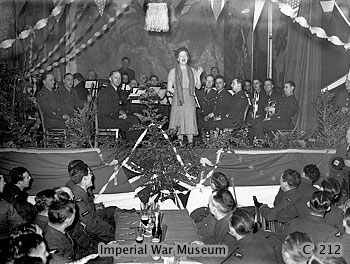
          [Image: Gracie Fields, accompanied by an RAF orchestra, entertains airmen at their Christmas party, December 27, 1939.  Photo by Royal Air Force official photographer, Mr. H. Hensser.]


          I write this in anticipation of attending two separate Christmas parties at the invitation of friends who are also potential sources of referrals for my mediation and other ADR services.  It follows my reading Geoff Sharp's recent post on whether attending such events creates an ethical dilemma for a mediator when the party's host is a "repeat user" of mediation services.  He points to an article by John Lande entitled "Lawyers' Routine Participation Directs Shape of Liti-Mediation" for a longer discussion of this issue.  Others have since weighed in with comments which generally suggest that a mediator should have "ethical concerns" about attending such parties, if for no other reason than "the appearance of impropriety".
          As Geoff Sharp suggests, one could dismiss this concern as "ridiculously politically correct", or more accurately perhaps, a classic case of "navel gazing", but this would trivialize what I think is a real problem affecting many mediators.  Let's get right to the point.
          Mediator neutrality is not just an ethical obligation, it is at the essence of what mediators do.  First and foremost, good mediators are neutral.  If you can't be neutral, and you can't convince the parties and their counsel that you have been neutral, you shouldn't be in this line of work.
          This debate is not really about Christmas parties, but about what Professor Lande calls the risk that "continuing relationships between lawyers and mediators can result in mediator bias."  His suggestion is that anytime a mediator views a lawyer as a source of future business, that lawyer's client has an advantage in the mediation.  I would agree that the client might have that advantage, or an advantage created by any number of other factors that could potentially affect the mediator's conduct ("consciously or unconsciously").  But a large part of being a mediator is having the ability to recognize the potential for such influences, and to deal with them effectively, whether by declining the case, disclosure or appropriate reflection and self-discipline. 
          The notion that repeat referrals from lawyers cannot be ethically accepted assumes the worst about the mediator, both ethically and with respect to his or her competence.  Moreover, it denies the parties' right to self determination of the process, and as a practical matter, makes it very difficult for the parties to obtain mediator subject matter expertise.  In my world, and I suspect many others, there are relatively few lawyers representing most of the clients  who are likely to be repeat users of  mediation services.  There also are relatively few mediators  with subject matter expertise available to serve those clients.  Requiring mediators with subject matter expertise to decline repeat users (whether lawyers or their clients) is to effectively prohibit a viable mediation practice.
          Most law firms rely heavily on "repeat users"; that is, they cultivate and maintain broad and long lasting relationships with their clients.  Law firms must represent these clients in accordance with numerous ethical mandates that often require some action contrary to their clients' interests.  This has never caused lawyers to believe that they should decline "repeat business" for fear of doing something unethical in order not to displease such clients.  Nor should they.  Part of being a good lawyer is knowing how and when to tell your best client that you can't and won't do something you think is unethical - even if it means losing the client.  Why as a profession do mediators think so much less of themselves? 
          I don't, and that's why I plan to go to both of my Christmas parties.  In fact, I will likely talk to potential "repeat users" at those parties about what it is that I can do for them as a mediator.  The first thing I will tell them is that they will get no special treatment from me, and that if they have a mediator who can be unduly influenced by a beer, a cocktail wiener or  a "repeat user," they should find another mediator.

Bringing Medicare To The Settlement Table Is Not So Easy


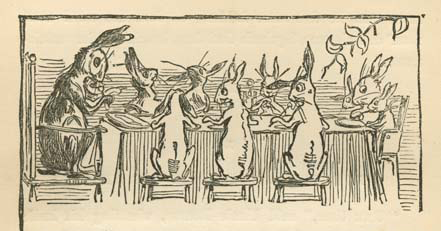
          [Image: Br'er Rabbit at the table from Uncle Remus, His songs and His Sayings: The Folk-Lore of the Old Plantation, by Joel Chandler Harris, p. 90.  Illustrations by Frederick S. Church and James H. Moser.  New York: Appleton and Company, 1881.]


          Recently I posted on the trend among third party healthcare payers to pursue subrogation claims against the proceeds of tort settlements obtained by their covered beneficiaries.  A case involving Walmart's recovery from the family of an injured former employee underscored the importance of bringing all necessary parties to the settlement table, even those who are not immediately apparent.   This week's AHLA Health Lawyers Weekly contained a summary of a case making it clear that Medicare, too, will pursue its subrogation claims in such cases, even when the parties have tried their best to settle around Medicare's claim. 
          In Mathis v. Leavitt, No. 07-0062-CV-W-RED (W.D. Mo. Nov. 26, 2007), the family of a deceased Medicare beneficiary settled a wrongful death claim against the tortfeasor which they characterized as being "in excess of the $77,403.67 that Medicare had paid on behalf of [the decedent]" following his injury but prior to his death.  The family then asked Medicare to acknowledge that it had no lien against the settlement proceeds, and Medicare refused.  On cross-motions for summary judgment, the District Court ruled in favor of Medicare.  The Court found that since a claim under the Missouri Wrongful Death  Statute includes damages for medical expenses paid on behalf of the decedent prior to death, the proceeds of settlement included "payment by a responsible party" from which Medicare must be reimbursed.
          Although it is not clear, it appears that the Court in Mathis is saying that the parties cannot leave Medicare reimbursed medical expenses out of a settlement agreement under the Missouri Wrongful Death Statute and thereby defeat Medicare's later subrogation claim.   Since the  same result  could likely be argued under most states' wrongful death statutes, the outcome in Mathis is significant.  Whether other courts will follow, and whether the same result will occur in non-death cases under common law remains to be seen.  Plaintiffs seeking to settle all tort cases involving significant prior Medicare reimbursement of expenses will do well to bring Medicare to the table, or proceed at their own risk.

Presenting Your Case In Mediation - Using The Fear Of Risk

           
               [Image: Screen capture from the film Carnival of Souls.]


          Thank you to Geoff Sharp for alerting me to the article by jury consultant Bob Gerchen entitled "How To Build A Mediation Presentation That Will Make An Insurance Adjuster's Sphincter Tighten."
          As the title would suggest, the author focuses on the need for advocates who are adverse to insurance adjusters to approach each mediation session as a unique opportunity - and gives some great advice on how to achieve a better result.  As I read it, it occurred to me that the article had a more basic theme that could be applied as well by advocates in most mediations.  To paraphrase Mr. Gerchen, your adversary, while in mediation, cares "about one thing more than anything else in the world, even more than money.  Risk."
          While most lawyers realize the importance of coming to a mediation session prepared to discuss the strengths of their case and the weaknesses of their opponent's case,  many do not focus on the fact that the mediation is not merely a "dry run" for the trial.  Mediation offers an opportunity to demonstrate why your adversary should not want to accept the risk of leaving the room without a settlement.  As Mr. Gerchen puts it, you need to ask yourself, "If I were [on the other side], what about this case would freak me out?"
          This is good reading and an important reminder that advocacy in mediation is not just another day in court.

Read The Fine Print: What Does Your Managed Care Agreement Say About ADR?

         
          [Image: Sumerian contract: selling of a field and a house. Shuruppak, ca. 2600 BC, pre-cuneiform script.]


          I just ran across a post by Robin Fisk on her Managed Care Contracting & Provider Payment blog entitled "Getting to Know the Dispute Resolution Provisions in your Payor Contracts."  Blogging about ADR and healthcare law tends to take me into some interesting territory involving mediation theory, health policy and the latest court decisions.  It's always good to read something that brings me back to what most healthcare providers and their lawyers are dealing with on a day to day basis.
          Robin's piece concisely identifies and explains what can be in a "standard" ADR provision, and why a provider should care about it.  She accurately notes that many of these provisions are not negotiable, but points out that providers should at least understand what they are in for - and perhaps take those consequences into account when negotiating other provisions of the same agreement.
          The article is an excellent checklist that I recommend to all.  Thanks, Robin!

New Jersey Decision Throws Physician Owned Facilities Into Confusion

        
          [Image: Confusion of Tongues, illustration by Gustave Dore (1832-1883)]


          In a decision filed November 20, 2007, Judge Robert P. Contillo, sitting in the Superior Court, Chancery Division, Bergen County, decided cross-motions for summary judgment filed by all parties in Joseph Garcia, M.D., et al v. Healthnet of New Jersey, Inc. v. Wayne Surgical Center, LLC, et al (the "Wayne Surgical Center" case).  In a very thorough, 31 page opinion, the Court disposed of numerous claims by all parties on a variety of legal theories, all of which revolved around the propriety of the billing of Healthnet's insured patients for same day surgery services provided at the Wayne Surgical Center by otherwise unrelated surgeons who owned investment interests in that surgi-center.  Although the resolution of all of the issues was interesting and important, one aspect of the decision potentially throws into confusion the legality of physician ownership of many facilities in New Jersey to which the investor physicians make referrals.
          In addition to the federal anti-kickback and Stark Law restrictions on investments by referring physicians, those practicing in New Jersey are subject to a state statute, N.J.S.A. 45:9-22.4 et seq. (commonly known as "the Cody Act"), which generally prohibits all referrals to a health care service (other than certain named modalities) in which the physician has a significant beneficial interest.  Notwithstanding the apparently clear language of the Codey Act, the prevailing wisdom in New Jersey's healthcare community for some time has been that there is an implied exception for referrals by physicians to facilities at which the referring physician would perform the required professional service - a so called "extension of practice" exception.  This view gained support in the form of an advisory opinion issued by the New Jersey Board of Medical Examiners (the agency charged with enforcing the Codey Act's restriction on medical practice) which seemed to endorse the notion of an exception for self-referrals.  It also gained support from the presumption that ownership arrangements permitted by federal law should not, as a practical matter, have much enforcement risk under state law.
          After distinguishing the NJ BME's advisory opinion and questioning its authority to alter statutory mandates, the Court in Wayne Surgical Center made it clear that the Codey Act prohibits all referrals by physicians to surgical centers in which they hold an investment interest.  Although the Court found that the investor physicians in this case reasonably believed their referrals were proper at the time (based on the prevailing industry view), and thus dismissed Healthnet's claims of billing fraud, the  unstated conclusion of the opinion seems to be that all future referrals by the physician -owners of Wayne Surgical Center may risk exposure to such claims (that is, that the Court's decision effectively puts them "on notice").  Presumably, the same could be said of any other physician-investor at another New Jersey facility who has notice of this Court's decision.  Although it is only a trial court opinion, and is subject to appeal, it appears to me that the Court's reasoning in the Wayne Surgical Center opinion will be difficult to escape.
          Rumors abound about the fallout from this decision.  Are all physician-owners' referrals at risk immediately?  Are hospital-physician joint ventures at risk, or do they remain protected by the NJ BME advisory opinion (which the Court distinguished, in part, based on hospital involvement in that situation)?  Will emergency legislation be passed to "correct" this result?  Can anything be done by the NJ BME?  Does the Wayne Surgical Center opinion constitute the kind of event that triggers a "regulatory jeopardy" provision in existing deal documents?  Time (and I think not much time) will tell.
          Meanwhile, Congressman Pete Stark recently told David Whelan, as reported in Forbes.com, that he regrets having written the law that commonly bears his name.  I first saw mention of this in Robert Laszewski's post in the Health Care Policy and Marketplace Review, and just had to read it.  Apparently, Congressman Stark now recognizes that he has created a Byzantine morass of laws, regulations and advisories, but seems surprised that healthcare providers and their lawyers have been working hard to do business while complying with the law, calling such efforts the pursuit of "loopholes".  Don't expect much relief from the Stark law anytime soon.
          Confusion brings uncertainty - but with it opportunity.  Stay tuned.                


New Jersey Healthcare Providers May Face Unlimited Wrongful Death Claims For Grief

                   
           [Image: Bridge across "Bottomless Pit" in Mammoth Cave, by Daniel Schwen, Nov 25th, 2007]


          The November 26, 2007 print edition of the New Jersey Law Journal carried a story by Maria Vogel-Short entitled "Lawmakers Divided Over Caps for Wrongful Death Grief Damages."  The article describes a bill, A-1511/S-176, that would expand New Jersey's Wrongful Death Act, N.J.S.A. 2A:31-1, to permit survivors to recover for their own mental anguish and emotional pain and suffering (i.e., "grief").  Currently, the law limits recovery by survivors to pecuniary damages.  Apparently, this result is thought by some to be "unfair" to survivors of very young and very old decedents, since the pecuniary losses resulting from such deaths are relatively small when compared with those from an economically productive adult decedent.  Translation: juries find it much harder to reach large verdicts for the survivors of very young and very old decedents, so something has to be done. 
          This reasoning sidesteps the basic question of whether a totally new basis for awarding damages in New Jersey is necessary, or what its consequences will be for the rest of us.  It also leaves aside the fact that survivors of all decedents, even the ones who already recover large sums because of pecuniary losses, will be able to add a new claim to their lawsuit.
          My former partner, David Kott, who represents the New Jersey Business and Industry Association, is quoted in the article to say that "the law as written could foster an anti-business atmosphere in New Jersey", citing a "problematic tort climate".  In a subsequent phone interview, David also pointed out the potentially disastrous effects of this bill on healthcare providers.  As he noted, doctors are already having a hard time finding affordable medical malpractice insurance, particularly in certain specialties.   Moreover, once the possibility of completely unlimited damages for grief is introduced into settlement negotiations, you have to wonder how many cases that previously would have settled at the policy limits will now go to trial.  Even moderately successful physicians in New Jersey who own highly appreciated residential real estate and other assets will become a source of funding for excess liability claims. 
          The resolution of death claims resulting from alleged medical negligence is already difficult in the best of circumstances.  The proposed  legislation would propel these negotiations into uncharted territory.
          The New Jersey Law Journal article focuses primarily on the debate over whether "caps" should be placed on damages for "grief".  Why not ask the more basic questions?   Why are we doing this?  Where are the cases of gross injustice that must be remedied?  Who will benefit?  What effect will it have on New Jersey's already strained healthcare delivery system?  Let's hope somebody in Trenton thinks about this before we plunge into the unknown.