
Choosing Your Healthcare ADR Provider


[Image: New potato releases by Agriculture Research Service scientists give us even more choices of potatoes to eat.  Photo by Scott Bauer.]  


          If you are a party or legal counsel in a conflict or dispute in the healthcare field, and you believe that some form of alternative dispute resolution process may (or must) be utilized to solve it, you must persuade the other parties involved to share that conclusion and select a qualified ADR provider.  Often these tasks are related.  Opinions differ on how to select a neutral, but my view is that he or she should possess the following attributes:


1.  The neutral should be “neutral”.  Although obvious, the ADR provider you choose should be impartial, fair, open-minded and without conflicts of interest. 

2 . The neutral should be intelligent and creative.  Resolving disputes in the healthcare industry efficiently requires the ability to quickly grasp and understand complex facts and legal issues while simultaneously assessing and attending to the expectations of the parties. It often requires the ability to fashion creative alternatives that work both legally and practically.

3.  The neutral should understand your business.  Although many neutrals believe they can successfully resolve disputes in any industry, it is not reasonable to believe that they can do so efficiently.

4.  The neutral should understand the legal issues.  The web of legal constraints affecting most healthcare disputes is daunting. No amount of general legal experience at the bar or on the bench prepares a neutral to effectively assist the parties or their counsel in such cases.  Jerry Roscoe made this point persuasively in a particular context with his recent article: Resolving Allegations of Health Care Fraud – Does the Mediator Matter? (posted on the ABA Dispute Resolution Section’s Healthcare Committee website).

5.  The neutral should be committed to ADR.  In order to be consistently effective, a neutral must first and foremost believe that alternative dispute resolution principals actually work. Without that belief, the neutral brings no energy or additional value to the engagement, but merely serves as a technician in guiding the parties through a scripted process.

6.  The neutral should be cost effective.  A major justification for the use of alternative dispute resolution is that processes such as mediation and arbitration will be less costly than traditional litigation.  Although this is generally true, it is also true that some ADR services will cost more than others.  Generally, cost will be a function of the neutral’s hourly/daily rate and the parties’ commitment to work with that neutral.

7.  The neutral should be committed to good service.  As a party or counsel in a conflict subject to alternative dispute resolution, you are a prospective consumer of ADR services.  In evaluating a neutral, you should assess the extent to which he or she will provide the level of service that a professional service client paying significant fees should enjoy.  


Healthcare Conflicts Appropriate For ADR


           [Image: Cliffs of Moher, Ireland, Photo by Tobias Helfrich, March 27, 2004]


          The range of conflicts arising within the healthcare industry that could benefit from the application of an alternative dispute resolution process is as broad as one’s imagination.  This is a partial list of the circumstances in which conflicts can arise and ADR can be used effectively.

  • Contracts between hospitals, physicians and other providers for professional services  (conflicts arising in their formation, operation, renewal or termination)
  • Contracts with vendors (conflicts arising in their formation, operation, renewal or termination)
  • Joint venture agreements (conflicts arising in their formation, operation or termination)
  • Medical staff relations (conflicts arising in interpretation or amendment of bylaws, inter-department issues or clinical policies)
  • Medical staff privileges (conflicts arising in individual applications or disciplinary matters)
  • Managed care agreements (conflicts arising in their formation, operation, renewal or termination)
  • Disposition of financially distressed facilities (conflicts involving creditors, government regulators, staff and community)
  • Inter-institutional affiliations, mergers and acquisitions (conflicts arising in their formation, operation or termination)
  • Physician practice acquisitions (conflicts arising in their negotiation or unwinding)
  • Governance matters (intra-corporate board conflicts, including conflicts concerning management  performance or bylaws revisions)
  • Patient relations (conflicts arising in consent to treatment, quality of care, medical errors, billing and collection matters)
  • Governmental regulation (conflicts arising in licensing, compliance or enforcement matters)
  • Employment issues (conflicts arising in employee discipline or termination)
  • Professional practices (conflicts arising in their formation, entry of new partners, withdrawal of partners, retirement or dissolution)

ADR as Tort Reform

          All of the attention devoted to healthcare reform by the entire field of Presidential candidates reveals little mention of the need for medical malpractice reform.  Yet is there any question that reform of the current system of using unfettered, contingency fee litigation to address medical errors is essential to a meaningful improvement of our healthcare system?  As noted recently in the Healthcare Policy and Marketplace Review, an upcoming Common Good Public Forum in Washington, D.C. on November 5 will address "Health Courts, Administrative Compensation & Patient Safety: Research, Policy & Practice."  The topics and speakers promise to be interesting.

          On a slightly different track to the same destination, Kathleen Clark (on the website of the Collaborative Law Committee of the ABA's Dispute Resolution Section) suggests the use of collaborative law as an alternative to the current malpractice litigation model.  The theory of Ms. Clark's argument is compelling, and should be considered in concert with the broader, governmental initiatives to be discussed at the Common Good Public Forum.  However, I think Ms. Clark dismisses too completely the utility of "non-collaborative" techniques such as traditional mediation in reforming the current malpractice system. 

          Notwithstanding the theoretical soundness of the collaborative approach, there are serious practical impediments to its widespread use by plaintiffs' and defendants' counsel in the near future.  More importantly, there is no reason that the boundaries of traditional mediation cannot be pushed incrementally to include a wide range of techniques to help resolve malpractice claims on a case by case basis.  Writing in the current issue of Dispute Resolution Magazine (Fall 2007, Volume 14, Number 1), David A. Hoffman cogently illustrates the evolving boundary lines between mediation, arbitration and collaborative law.  Although not expressly directed at the malpractice debate, his points would apply there as well.

          Malpractice reform may be closer than we think.

 
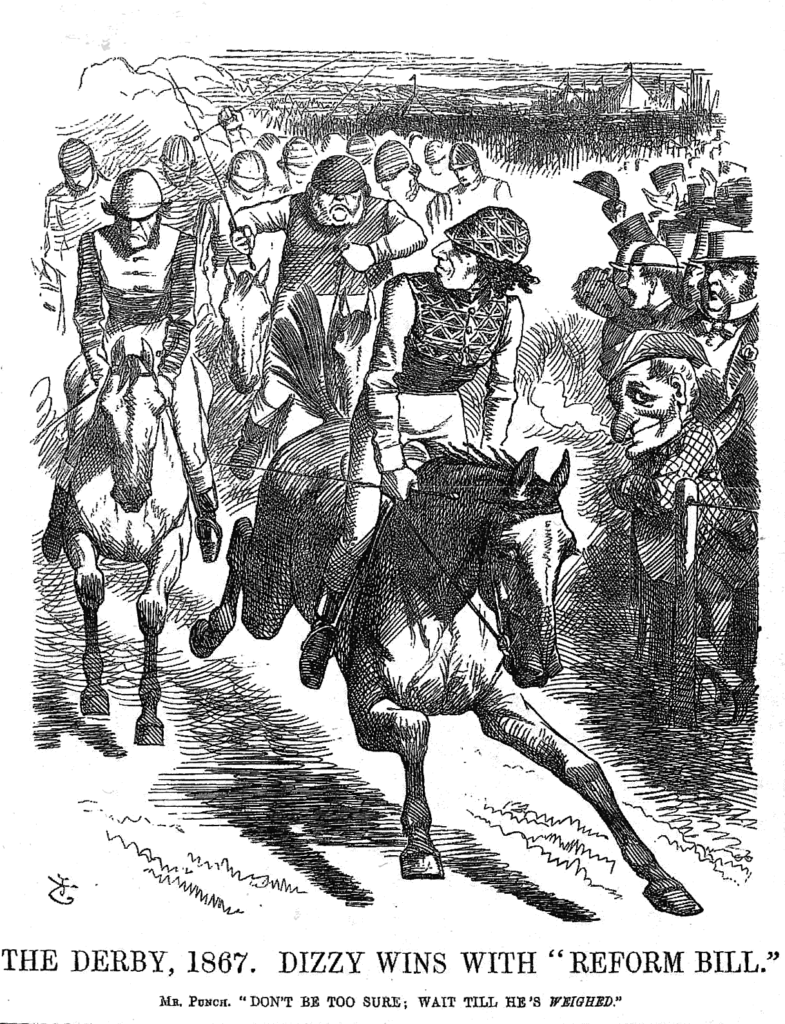
[Image: Cartoon by John Tenniel, for Punch of May 25, 1867. The leading jockey is Benjamin Disraeli;  to his right is William Gladstone. The Reform Bill referred to ultimately became the 1867 Reform Act.]

Why ADR Works In Healthcare, Reason #3

          Completing the thought addressed in the two previous posts, there is a third reason why ADR works well in resolving healthcare industry disputes.


[Image: "Smeden og bageren". Illustration by Theodor Kittelsen for Johan Herman Wessel's poem]


Reason #3. 

          Parties to a healthcare dispute can especially benefit from ADR because the unique and complex subject matter of their conflict can be readily accommodated.  By selecting an ADR process and a neutral best suited to the conflict at hand, the parties move immediately into an efficient and productive mode of dispute resolution.  Resorting to traditional courtroom litigation often requires that a judge be educated on the parties’ business model, the world of healthcare finance and reimbursement, and a variety of legal constraints unique to the healthcare field.  Experience indicates that this is a difficult, time consuming and expensive process.  Although most judges are highly intelligent and capable, there is only so much time that can be devoted to each case.  Moreover, most judges sit in courts that handle cases of all varieties, in which healthcare cases are a relatively infrequent occurrence.

          By selecting an ADR neutral with substantive knowledge of the healthcare business and healthcare law, the parties achieve not only efficiency, but a much greater likelihood that they will obtain a result that is fair and mindful of both parties’ real interests.  Although the precise role of the neutral varies within the ADR process selected, the neutral can often help the parties and counsel better identify their interests and how they might mesh with those of the other party.  Where common ground is difficult to find, the neutral can help each party better understand all consequences of the proposals on the table, as well as those of “walking away”.  Sometimes, the neutral’s best value comes from affirming something a party has already heard from counsel, but better accepts with the neutral’s concurrence.  The credibility of the neutral as someone who truly understands the conflict just as well as the parties and their counsel is critical to achieving this result.

          Many examples of this advantage of ADR in healthcare can be imagined, but one may illustrate the point.  A hospital that has “exclusive” contracts with two medical groups to provide two different kinds of medical services at the hospital is faced with a dispute between the groups over which of them has the right to perform a new procedure, a dispute which quickly becomes a three way conflict involving the hospital.  Such “turf battles” are not unusual.  Aside from reviewing whatever the parties’ existing contracts say on the subject, the resolution of this conflict may require consideration of expert input on the impact of the outcome on patient care; the application of the hospital’s medical staff bylaws; provisions of existing managed care agreements;  Medicare reimbursement rules concerning permissible billing by the respective groups; state law and regulations governing hospital licensing and permitted scope of medical practice; and the resolution of other previous (or potential) “turf battles” at the same hospital.  Although the use of ADR in this case may not make all parties wildly happy, the neutral’s appropriate and timely attention to all of these factors will vastly improve the quality and fairness of the outcome.

Why ADR Works In Healthcare, Reason #2

          Continuing the thread started in my last post, there are several reasons why ADR works especially well in the healthcare industry. 


[Image: Photo of Coins in the Trevi Fountain in Rome being collected at early morning, by Giovanni Dall'Orto, March 2005]


Reason #2. 

          The parties to a healthcare dispute often (although not always) have interests at stake other than money, or which cannot easily be reduced to a specific dollar demand.  Traditional courtroom litigation is designed primarily to determine which party to a dispute must pay the other party, and how much.  Although courts can grant “equitable relief”, essentially ordering one party to do or stop doing something, that option is limited in scope and driven by the form of the prevailing party’s plea for relief.  In contrast, ADR processes embrace the notion that flexible solutions, tailored to the parties’ unique interests, offer  the best outcome to any dispute.

          An example of this advantage of ADR would be a dispute between a hospital and a medical group over the interpretation of the group’s contract to provide certain medical services at the hospital.  The dispute could involve any number of issues important to both parties, but could easily place the parties in a situation where the contract seemingly must be terminated, and one side will then sue the other for breach of contract.  Neither party in such case really wants to sue the other for money damages, nor do they want the disruption to patient care and hospital services that would accompany protracted litigation.  Courtroom litigation in such case will ultimately assure that the parties’ legal rights are determined and enforced, but it will also create the negative collateral effects that come from using too dull and heavy a tool.  The use of ADR processes in such a case would provide the parties with options and alternatives from which to jointly reach a workable solution.

          Other examples of this advantage of ADR would be disputes over the medical staff privileges to be granted by a hospital to a physician or other practitioner; conflicts between a hospital and its medical staff concerning the interpretation or amendment of the medical staff’s bylaws; disputes within the board of trustees of a health system concerning the system’s mission, or the performance of management; and disputes among providers concerning quality of care or patient access issues.  Although financial considerations may be important in all these disputes, in none of them does either party seek a payment of money.  ADR processes, as determined by the parties, could be focused immediately upon what the parties in such cases really care about. 

Why ADR Works In Healthcare, Reason #1

          Alternative dispute resolution (or “ADR”) is increasingly being used to resolve conflicts arising in all facets of society.  The chief benefits of ADR (cost savings, faster results, confidentiality, and the parties’ control of the process) have been well established.  ADR is particularly appropriate for use in the healthcare industry for several additional reasons, the first of which is described today:


[Image: Table 10 from Gilbert Beckett, A Comic History of Rome  c. 1850, Cicero denouncing Cataline]


Reason #1. 

          The parties to a healthcare dispute often have some interest in (or need for) a continuing relationship after the current dispute is resolved.  By its nature, traditional litigation is an adversarial and combative process.  The objective of each party’s counsel is to crush the other party’s case, and in the process, the other party is often hurt as well (if not destroyed).  In contrast, although ADR involves advocacy of both sides of the conflict, the parties have jointly committed to a process of their choosing to reach a fair result that both will accept.  The likelihood of a viable relationship after resolution of the dispute is thus vastly improved.

          Examples of this advantage of ADR could occur with respect to the relationships between a hospital and members of its medical staff; partners to a healthcare joint venture; members of a professional practice; health providers and their patients; and health insurers and health providers. Because the need for healthcare services continues to grow, and there are a limited number of established participants in the delivery of (and payment for) those services, there is a significant incentive in many disputes for both parties to put their conflict behind them.


Starting a blog on Healthcare ADR

         
[Image: Musher Thomas Knolmayer at the Willow, Alaska start point of the 2005 Iditarod sled dog race, Photo by Tech. Sgt. Keith Brown]


          With this post, I start my first blog and what I think is the only blog site devoted to the topic of alternative dispute resolution in the healthcare industry.   As stated above on the masthead, I intend to blog at the intersection of ADR and healthcare law.  Both of these topics are well covered separately elsewhere (see links and blogs in sidebar), and I will try not to duplicate those efforts. 

          To make this site most useful, and to bring some order to my thoughts, I am dividing the world of ADR For The Healthcare Industry into topics that make sense to consider separately.  In alphabetical order, this blog will discuss alternative dispute resolution in the context of:

Commercial Healthcare Disputes

End of Life and Treatment Decisions

Healthcare Arbitration

Healthcare Mediation

Healthcare Regulatory Actions

Hospitals, Physicians and Medical Staffs

Managed Care Payment and Coverage Issues

Medical Malpractice Claims

These topics will overlap, and undoubtedly will subdivide and recombine over time.  But this is where I will start.  Let me know what you think.